
Erosion Control Plan Best Practices for New Development
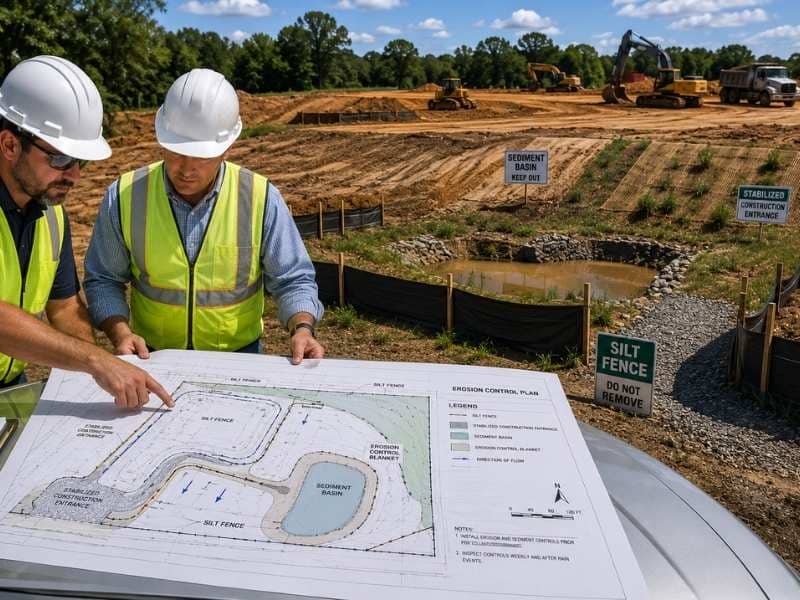
An erosion control plan shows how a construction site will keep soil in place while crews disturb the ground. It maps out the tools and steps that stop dirt from washing or blowing off the property. A solid plan protects the site, meets local rules and keeps mud out of nearby streets and streams.
Start With What Causes Soil Erosion
Soil moves for a few clear reasons, and a good plan starts by naming them. Rain does most of the damage. Each drop hits bare ground and knocks soil loose, then runoff carries that loose dirt downhill. On a slope, water picks up speed and strips even more soil as it goes.
Wind adds to the problem on dry, open sites. It lifts fine dust and dry topsoil and drops it somewhere else, sometimes off the property entirely. This shows up most on large graded pads that sit exposed for weeks.
Construction itself is a big cause. Clearing plants, grading the ground and driving heavy equipment all break up the surface that once held soil together. Bare, loose dirt washes away far faster than ground covered by grass or roots. Once an engineer knows where and how a site will lose soil, they can plan the right defenses for each spot.
Pick the Right Erosion Control Methods
No single tool stops erosion on its own, so a plan usually combines a few. Some tools catch soil at the edges of the site. Others cover bare ground or clean off truck tires before they reach the road. The right mix depends on the size of the site, its slope and how long the ground stays open.
Here are four common tools and what each one does:
- Silt fences are short fabric barriers staked along the low edges of a site. They slow runoff and trap soil before it leaves the property.
- Sediment basins are shallow pits that hold dirty runoff so soil can settle out before the water moves on.
- Erosion control blankets cover bare slopes with mesh or fiber. They shield the ground from rain and hold seed in place until grass grows.
- Stabilized construction entrances are gravel pads at the site exit. They knock mud off tires so trucks don’t track dirt onto public roads.
Good crews place these tools before they clear much ground, not after the first storm exposes the gaps. Putting controls in early costs far less than cleaning up soil that already left the site.
Meet Local Rules Before Construction Starts
Most places require an erosion control plan before anyone breaks ground. Under federal rules, any project that disturbs one acre or more of land needs erosion and sediment controls, and the plan has to be in place before construction begins. Many towns set an even lower limit, so small sites can fall under the rules too. Skipping this step can stall a project or bring fines.
A clear, complete plan also helps the project move faster. When reviewers can see exactly where each control goes and how the site will handle runoff, they spend less time sending the plan back with questions. Missing details or vague drawings slow everything down. It pays to submit a plan that answers a reviewer’s questions before they ask them.
Inspect Erosion Controls Throughout Construction
Erosion controls only work when they stay in good shape, and storms wear them down fast. A silt fence can sag, a basin can fill with soil and a gravel entrance can pack with mud. That’s why plans call for regular checks all through the build.
Federal rules give a clear schedule. Crews inspect the site at least every seven days, or every 14 days plus within 24 hours of any storm that drops a quarter inch of rain or more. After heavy rain is when controls fail most, so that post-storm check matters a lot.
Finding a problem means little without a quick fix. Most permits expect crews to repair a failed control by the close of the next business day after they spot it. A torn silt fence left for a week can let a single storm wash away weeks of careful work. Fast repairs keep small problems from turning into expensive ones.
Protect Nearby Roads, Streams and Property
Soil that leaves a site becomes someone else’s problem fast. Sediment runoff from construction sites runs 10 to 20 times higher than from farm fields, and up to 2,000 times higher than from forest land, according to the EPA. All that loose dirt has to go somewhere, and without controls it heads straight for the nearest road, ditch or stream.
Dirt in a stream does real harm. It clouds the water, smothers fish eggs and fills channels that used to carry water freely. Once sediment enters a waterway, cleaning it up is slow and costly. Keeping the soil on-site in the first place is the only cheap option.
There’s a legal side too. When mud washes onto a public road or into a storm drain, inspectors can hit a project with fines or even a stop-work order. Sediment on a neighbor’s land can also sour relationships and lead to complaints. A plan that keeps soil where it belongs protects the streams, the neighbors and the project’s own schedule and budget.
Frequently Asked Questions
What is an erosion control plan?
It’s a written plan that spells out how a construction site will hold soil in place during the work. The plan names the tools, like silt fences and basins, and shows where each one goes. Its main job is to stop dirt from leaving the site.
When is an erosion control plan required?
Most projects need one before any digging or grading begins. Federal rules kick in at one acre of disturbed ground, and many local rules apply to even smaller sites. If a project moves soil and sits near a road or stream, it almost always needs a plan.
Why is erosion control important during construction?
Construction leaves bare soil that washes away far faster than covered ground. Without controls, a single storm can send mud onto roads, into drains and down to streams. That can bring fines, harm local water and cost a lot to clean up. Good controls stop the problem at the source.
Who prepares an erosion control plan?
A civil engineer or a trained erosion and sediment control specialist usually draws up the plan. On many projects, a certified inspector then checks the controls in the field. The landowner or builder holds the legal responsibility for having an approved plan in place.
How often should erosion control measures be inspected?
Under federal rules, crews check the site at least every seven days, or every 14 days plus within 24 hours of a storm that drops a quarter inch of rain. Some state rules ask for more. After a big storm is the most important time to look, since that’s when controls tend to fail.
