
Soil Testing Is Starting Earlier in New Projects
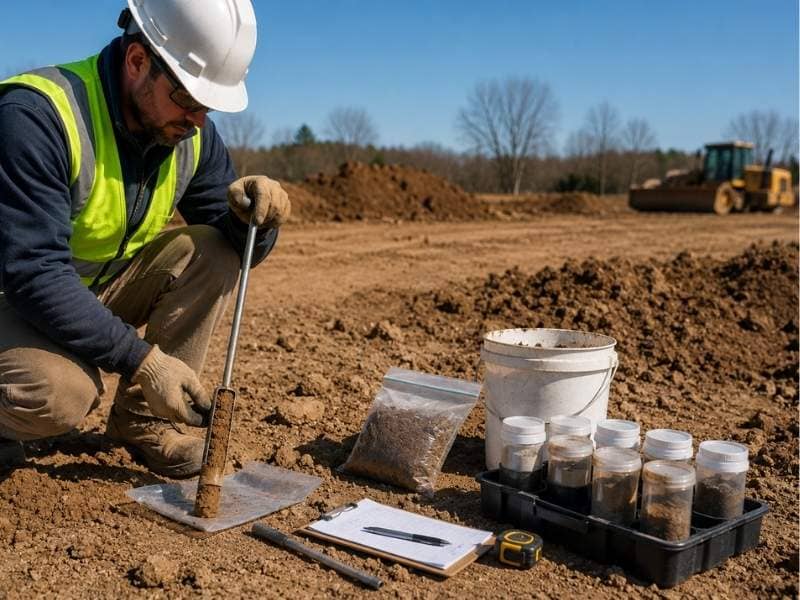
Soil testing has become one of the first steps on many construction projects. What’s underground affects everything above it. Knowing what the ground is made of before design work begins gives engineers and project owners a clearer picture of what they’re building on. Projects that skip this step often find out why the hard way.
Why Soil Testing Happens Before Design Starts
Early soil testing gives design teams the ground conditions they need before any plans are finalized. Without it, designs are built on assumptions that may not match reality.
Every piece of land is different. Clay, sand, rock and groundwater can all exist on the same site at different depths. A design that works on firm, dry soil may fail on soft or wet ground. When engineers know the conditions early, they can choose the right foundation type and plan for drainage before a single drawing is made.
Testing after the design is done works backwards. If results don’t match what the design assumed, drawings and calculations have to change. That costs time and money that could have been avoided.
What Soil Testing Can Tell You
Soil testing reveals four key things that shape foundation design, drainage planning and material choices.
- Bearing capacity: how much load the soil can hold without shifting. A foundation built for firm ground will behave very differently on soft clay.
- Groundwater depth: how close water sits to the surface. High groundwater puts pressure on foundations and creates drainage problems that are costly to fix later.
- Soil composition: whether the ground is sand, clay, silt or rock. Expansive clay swells when wet and shrinks when dry, putting stress on foundations over time.
- Settlement potential: how much the ground may compress under the weight of a structure. Uneven settlement is a leading cause of cracking and misaligned doors and windows.
How Soil Testing Helps Avoid Problems
Problems found during soil testing are far cheaper to fix in the design phase than during or after construction.
Weak soil found early might mean switching from shallow footings to deep piles. That’s a manageable change on paper. Found after the foundation is poured, it becomes a much bigger problem. Poor drainage caught early can be solved with proper grading or french drains. The same issue found after the building is finished often means excavation and expensive retrofits. Unexpected soil conditions mid-construction force work to stop while engineers figure out a fix, which adds cost and delays the project.
How Soil Testing Can Save Time and Money
Projects that test early spend less time on redesigns and fewer hours dealing with surprises. Studies in the geotechnical field show that every dollar spent on site investigation saves several dollars in construction and repair costs.
Early soil data also helps contractors plan better. Equipment choices become easier when ground conditions are known. Excavation costs can be estimated more accurately. Material orders reflect what the site actually needs rather than worst-case guesses. Removing unknowns early also shrinks contingency budgets, freeing up funds for other parts of the project.
When to Schedule Soil Testing
Soil testing should happen before final design begins, ideally during the site evaluation phase. The earlier results are available, the more useful they are.
The best time to test is as soon as the project site is confirmed. If multiple sites are being considered, early soil data can help narrow the choice by flagging locations with conditions that would make building unusually expensive. At minimum, testing should wrap up before structural drawings are started. Waiting too long leaves engineers little time to use the findings.
Seasonal timing matters too. Frozen ground limits how deep borings can go. Spring testing after a thaw and fall testing before a freeze give the most accurate picture of normal site conditions.
Frequently Asked Questions
Why is soil testing important?
Soil testing shows ground conditions that affect how a structure is designed and built. Without it, teams rely on guesses about what’s underground. Wrong assumptions lead to foundation problems, unexpected costs and delays.
What does soil testing check for?
It checks bearing capacity, groundwater depth, soil composition, compressibility and settlement potential. On some sites, it also looks for contamination or organic material that could affect construction.
When should soil testing be done?
Before final design begins. The best time is during the site evaluation phase so results are ready when engineers make foundation and drainage decisions.
How long does soil testing take?
A basic investigation for a small project takes a few days of fieldwork and one to two weeks for lab results and reporting. Larger sites may take several weeks.
Who performs soil testing?
Geotechnical engineers handle soil testing and prepare reports for structural and civil design teams. On most permitted projects, a licensed geotechnical engineer is required to sign off on the soil report.
