Roadway Design Reviews Are Taking Longer
Roadway design reviews have always been a key step before construction begins. But lately, many projects are spending more time in review than expected. Stricter rules, more safety checks and larger project scopes have added steps to the process. Knowing why reviews take longer, and what teams can do about it, helps keep projects on track.
Why Roadway Design Reviews Take More Time
Roadway design standards have changed a lot over the past decade. Safety rules are stricter. Environmental reports require more detail. Accessibility standards have grown. Each update adds more items for reviewers to check before a plan can move forward.
Projects have also gotten more complex. A road that once needed a simple plan now requires stormwater reports, traffic studies and utility coordination. Reviewers must go through all of it before signing off.
Staffing plays a role too. Many agencies are handling more projects with the same number of staff. That creates longer wait times between submission and feedback.
Common Problems Found During Reviews
Most delays don’t come from major design failures. They come from small, repeated issues that send plans back for fixes.
- Missing or unclear details: drawings that leave out dimensions, grades or cross-sections make it hard for reviewers to check compliance. Notes that mention standards without naming the version create confusion.
- Inconsistent plan sheets: when the plan view shows one thing and the profile view shows another, reviewers flag it and send the package back. The same happens when calculations don’t match the drawings.
- Incomplete utility coordination: if a roadway design doesn’t account for underground utilities, reviewers will catch it. Moving utilities after construction starts is one of the costliest problems a project can face.
How Good Planning Helps Speed Up Reviews
The best way to shorten review time is to send a complete, well-organized package the first time. Reviewers move faster when they can find what they need without asking for more information.
Start with a current survey. Old survey data leads to design choices that don’t match real conditions, and reviewers notice quickly. Using up-to-date utility records and checking with utility owners before submission removes one of the most common reasons plans get sent back.
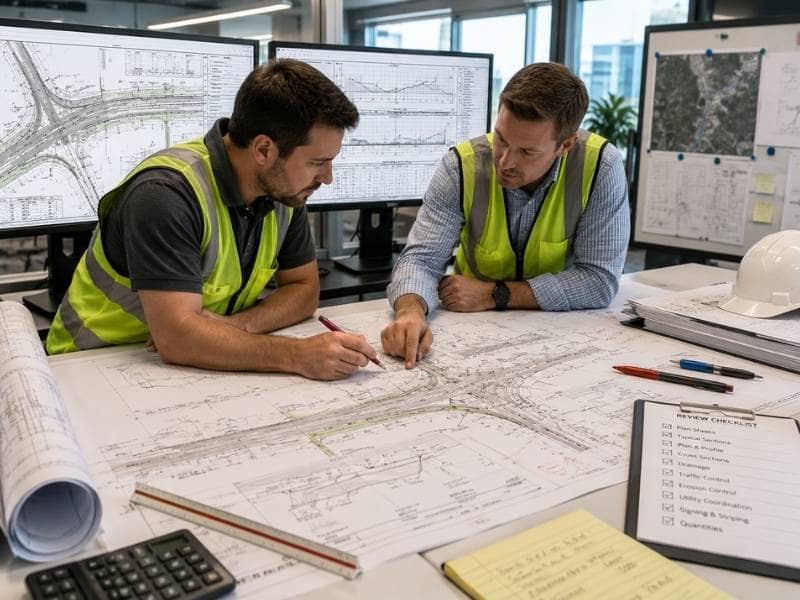
An internal check before submission also helps. Having a second engineer look over the package catches mistakes that are easy to miss after working closely on a project. Using the agency’s own checklist gives the team a clear bar to meet before anything goes out.
Why Teamwork Matters During the Review
Roadway design reviews involve more than one team. Engineers, traffic analysts, environmental staff and utility companies all have a part. When these groups don’t stay in contact, problems build up and reviews slow down.
Early contact with reviewers can prevent surprises. Some agencies offer pre-submission meetings where teams can ask questions and confirm their approach before a formal submission. These meetings take time upfront but often save more time later.
During the review, responding to comments quickly keeps things moving. Vague replies often lead to more back-and-forth. Answering each comment clearly, and pointing to where the fix appears in the updated plans, lowers the chance of another round of corrections.
Tips for Better Roadway Design Plans
Small changes in how plans are put together can make the review go more smoothly.
Start with the reviewing agency’s checklist. Most transportation departments post their submission requirements. Building the plan around those from the beginning is easier than checking for gaps at the end.
Label everything clearly. Sheet titles, north arrows, scale bars, revision dates and reference notes should be consistent across every sheet. A well-labeled package is faster to review and leaves less room for questions.
Send a complete package. An incomplete submission, even a strong one, restarts the review clock. Taking a few extra days to finish is better than submitting early and waiting for a rejection.
Keep a log of comments and responses. On projects with more than one review round, a simple comment-response record helps both the design team and the reviewer track what changed and where to find it.
Frequently Asked Questions
Why do roadway design reviews take longer?
Standards have become more detailed, projects are more complex and many agencies are handling more work with the same staff. Each new safety, environmental or accessibility rule adds more items to check before a plan is approved.
Who reviews roadway design plans?
Reviewers may include transportation engineers, traffic analysts, environmental staff and utility coordinators. Complex projects often involve more than one agency, each with its own requirements and timeline.
What can delay a roadway design review?
Missing details, plan sheet conflicts, outdated survey data and incomplete utility coordination are the most common causes. Slow or incomplete responses to reviewer comments also add time.
How can review time be reduced?
Send a complete, well-organized package the first time. Follow the agency’s checklist, coordinate with utilities before submission and have a second engineer check the plans. A pre-submission meeting with the agency can also help on larger projects.
Why are roadway design reviews important?
Reviews confirm that a design meets safety, accessibility and environmental standards before construction starts. Finding problems at the design stage costs far less than fixing them during or after construction.
