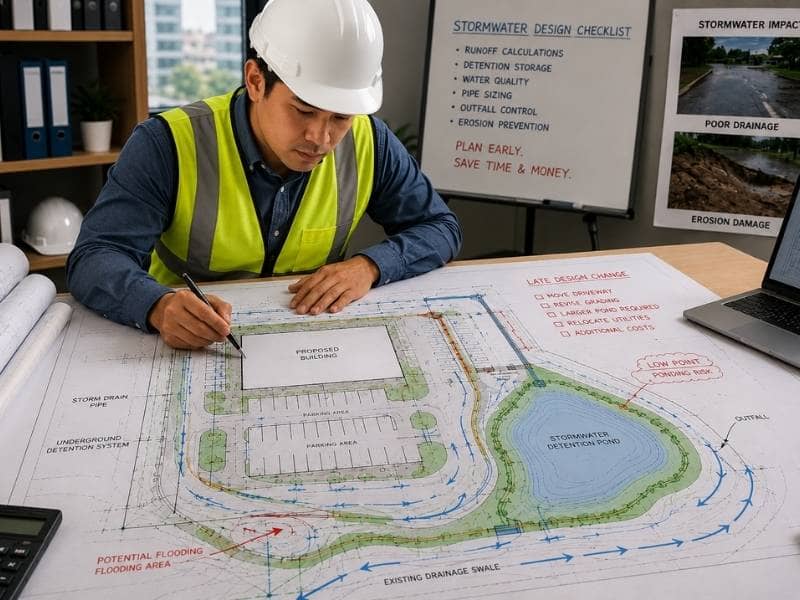
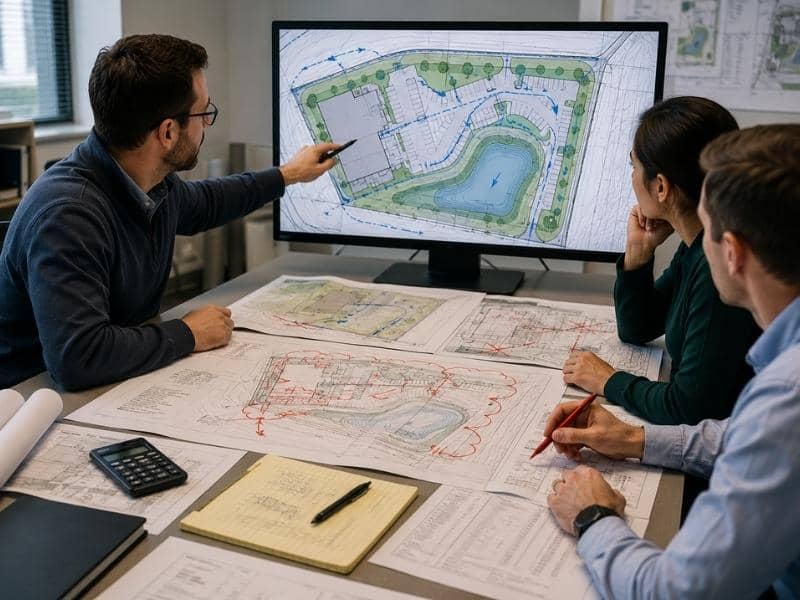
Stormwater design plans where rain goes on a property. Plan it early, and the project runs smoothly. Plan it late, and costs go up fast. New drainage rules now ask for more care. This makes early stormwater design more important than before. Here is why late drainage planning costs so much.
Why Early Stormwater Design Matters
Drainage planning should start on day one. It should not wait until later. Early stormwater design gives engineers more room to work. They can plan water flow the right way. They do not have to fight old choices that are already locked in. New rules now ask for more careful runoff math. They also ask for cleaner water rules than before. Projects that follow these rules from the start feel less stress. Projects that wait must redo parts of the plan. Starting early helps the whole team see the site better. Grading, utility spots, and building spots all depend on this. The team must know where the water goes first.
How Late Changes Can Raise Costs
Waiting to plan drainage later almost always costs more. A drainage system added too late can force roads to move. It can also force utility lines or buildings to move. Moving a road just a few feet means redoing a lot of work. Crews must redo the grading. They must redo the utility lines too. Shifting a building to make room for water storage can change parking spots. It can also change setbacks and the size of the building. None of these changes are easy once other parts of the plan depend on them. Engineers end up redoing drawings that were almost done. That extra work adds hours nobody planned to pay for. The earlier drainage gets locked in, the less everything else has to move.
How Drainage Problems Can Slow Down Permits
A stormwater plan with wrong numbers causes just as much trouble as a missing one. Reviewers check the runoff numbers against the size of the site. They also check the type of ground cover. They check the rules for that zoning area too. A wrong pipe size gets flagged right away. A small water storage area gets flagged too. Then the whole plan goes back for fixes. Each round of fixes adds another wait. The wait happens before the next review slot opens. A correct stormwater plan moves through review with far fewer stops. Getting the numbers right the first time saves weeks of back and forth.
Why Flooding and Erosion Can Become Bigger Problems
A small drainage fix on paper can turn into a big repair later. This happens once the building is already built. Standing water in the wrong spot can soften the soil under a foundation. This can happen slowly over time. Erosion on a bad slope can wear away grass and dirt. It can damage a fence too. It can even wreck a parking area. Fixing these problems after the concrete is poured means tearing into finished work. It is not just changing a drawing anymore. The cost of a fix grows at each stage of building. A problem caught during planning is a small pencil mark. The same problem caught after move in becomes a big dig up job.
How Good Stormwater Design Saves Money
Bringing in a civil engineer early helps drainage get the care it needs. This happens before other choices lock the plan in place. An engineer can map how water moves across a site. This helps catch problems while they are still easy to fix. Early help often stops the high costs that come from late changes. It also cuts down on back and forth with permit reviewers. A well planned stormwater design tends to move through approval faster. Projects that plan drainage early spend less money fixing surprises. They also spend more time staying on schedule.
Stormwater design works best when it starts on day one. Early drainage planning avoids costly redos. It keeps permits moving. It also protects a property from flooding and erosion for years to come.
Frequently Asked Questions
What is stormwater design?
Stormwater design is the plan for where rain goes on a property. It keeps water away from buildings and roads. Good design moves water to a safe spot every time it rains.
Why should stormwater design start early?
Starting early helps stop delays and extra costs. It also gives engineers more time to plan the site well. Early plans fit in with the rest of the design instead of fighting it.
Can drainage problems delay a project?
Yes, drainage issues can slow down a permit. They can also force changes to the plans. A reviewer will not approve a plan until the numbers are right.
Can flooding happen on small projects?
Yes, even small lots need good drainage. Without it, water can still cause damage. A small site can flood just as fast as a big one.
How does stormwater design save money?
Good planning helps avoid costly fixes later. It also keeps the project on schedule. Catching problems early costs far less than fixing them after construction.