
Site Plan Errors That Can Delay Your Project
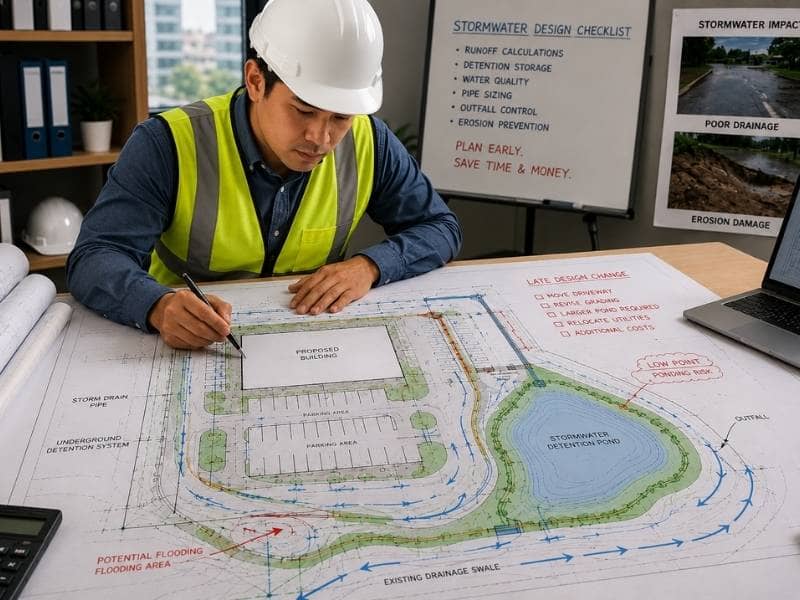
A site plan shows a city how a property will look once construction starts. It marks the building, the driveway, the utilities, and the drainage system. When a site plan has even one error, a project can sit in review for weeks. Here are five common mistakes that slow down approval, and why each one matters.
Missing Property Details on a Site Plan
A site plan needs clear property lines, easements, and setback areas. Skip one of these, and a reviewer will stop and ask for more information. That single request can add days or even weeks to the approval process. Many cities review plans closely, since more projects leave less room for error. A setback that’s off by just a few feet might look small on paper, but a reviewer will catch it fast. Easements cause trouble too, since they show who else has rights to use part of the land. Leaving one off the plan raises a flag right away. The fix is simple. Check the latest survey, confirm every boundary, and make sure nothing is missing before submitting the plan.
Utility Errors That Can Cause Big Problems
Water lines, sewer pipes, storm drains, gas lines, and power lines all need the right spot on a site plan. Get one wrong, and the project runs into trouble later, not just during review. A buried gas line in the wrong place can force a crew to stop digging in the middle of a project. That stop costs both time and money. Utility companies keep their own maps, and those maps don’t always match what a quick site visit shows. Checking utility locations early, before the design is locked in, gives the design team room to fix problems. Waiting until construction starts is the expensive way to find out if a line sits somewhere else. A short call to the utility company during planning often saves weeks later.
Poor Drainage Design on a Site Plan
Water has to go somewhere, and a site plan needs to show exactly where. Bad grading can send rainwater toward a neighbor’s yard instead of a drain, and reviewers catch that mistake fast. Missing stormwater details cause the same kind of delay. A reviewer can’t approve a plan that doesn’t show how runoff gets handled. Many cities require a stormwater plan once a project disturbs one acre of land or adds a large area of new hard surface. Good drainage also protects a property long after the permit gets approved. Poor grading can lead to flooding, foundation problems, or erosion later.
Driveway and Parking Mistakes That Delay Approval
A driveway in the wrong spot causes more delays than most people expect. If it sits too close to an intersection or blocks a clear view of traffic, a reviewer will ask for a redesign. Parking counts cause similar problems. Cities set minimum parking numbers for a reason, and a plan that falls short gets sent back for more spaces or a smaller building. Traffic flow matters too. Cars need a safe way in and a safe way out, especially on busy streets. A cramped or confusing layout raises safety concerns that reviewers won’t ignore. Getting access and parking right from the start keeps a project out of the review line twice.
Changes Between Building Plans and the Site Plan
A building plan and a site plan need to match each other. When they don’t, reviewers notice fast. Maybe the building footprint shifted after a late design change, but nobody updated the site plan to match. Maybe a door moved, which changes where the walkway needs to connect. These mismatches force another round of review, and that round eats up time nobody planned for. Architects and engineers who talk early in the process catch these gaps before they cause a delay. A quick check between both sets of drawings, done before submission, costs far less than a rejected plan. Coordination between the two teams keeps the whole project on schedule.
Most site plan delays come down to small details that got missed early. Checking property lines, utilities, drainage, access, and building plans before submission keeps a project moving instead of stuck in review.
Frequently Asked Questions
What is a site plan?
A site plan is a drawing that shows where buildings, roads, parking areas, utilities, and drainage systems go on a property.
Why do site plan mistakes cause delays?
Missing or wrong details force a reviewer to ask for changes before approving a permit. Each round of changes adds more time to the schedule.
Why do permit reviews take longer in growing cities?
More projects mean more plans for reviewers to check, so each submission gets a closer look before it moves forward.
Who should prepare a site plan?
A civil engineer or design team should prepare a site plan so it meets local rules and fits the project’s needs.
Can a site plan change after it gets approved?
Yes, but big changes often need a new review. That extra review adds time to the project.
