
Detention Pond Design Requirements Keep Changing
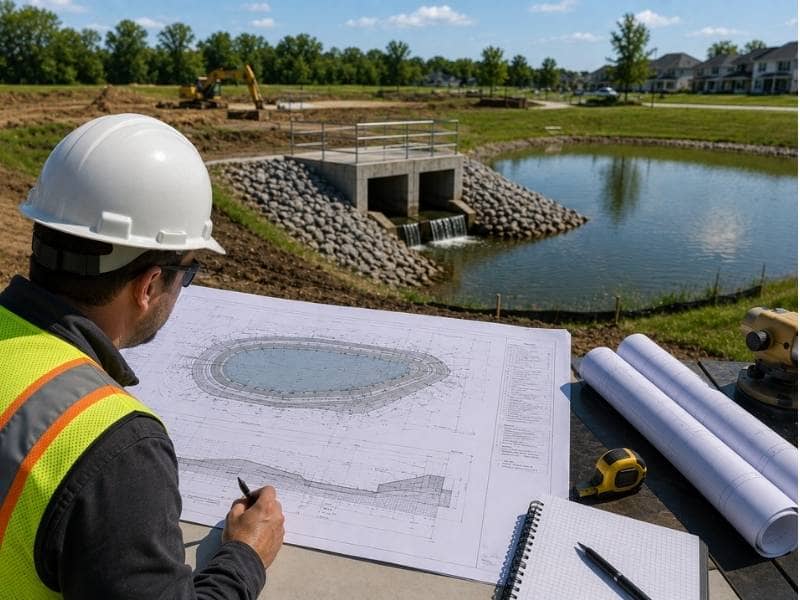
Detention pond design requires careful planning, but the rules behind it keep shifting. Local agencies update stormwater standards, flood maps get revised and new development changes how water moves across the land. Staying current with those changes while delivering solid designs is a constant challenge.
Why Detention Pond Design Rules Change
Stormwater rules don’t stay the same for long. As communities grow, more roads, parking lots and rooftops replace open land. Water that once soaked into the ground now runs off faster. That puts more pressure on drainage systems and raises flood risk downstream.
Agencies respond by tightening the rules. They may require ponds to hold more water, release it more slowly or meet new water quality standards. Heavier rain events have also pushed regulators to update their requirements, meaning ponds must now handle larger volumes than older standards called for.
A design that met code two years ago may not meet it today. Reviewers check against current standards at the time of submission.
What Makes a Good Detention Pond Design
A well-designed detention pond controls how much water leaves a site and how fast it leaves. Getting both right depends on four key parts.
- Pond size and volume: the pond must hold enough water during a storm to prevent flooding downstream. Engineers base this on the size of the drainage area and the design storm.
- Inlet and outlet structures: these control how water enters and exits. A properly sized outlet slows the release of stored water so it doesn’t overwhelm the system below.
- Side slopes and depth: slopes that are too steep are harder to maintain and create safety risks. Most designs use gentle slopes and limit depth to reduce danger to people and wildlife.
- Emergency spillway: every pond needs a backup path for water during storms that go beyond the design capacity. Without one, water can overtop the embankment and cause serious damage.
How New Rules Affect Projects
When rules change mid-project, the effects spread quickly. A pond sized to meet last year’s standards may need to grow if new requirements take effect before the permit is issued.
A larger pond needs more land. That affects grading, utility layouts and sometimes the layout of the whole site. On tight sites, there may not be room to expand, which pushes engineers toward options like underground storage or off-site solutions.
Rule changes also slow down approvals. If a project spans an update, confirming which standards apply with the reviewing agency early avoids bigger delays later.
Common Problems in Detention Pond Design
Even well-planned projects run into trouble when site conditions don’t match what the design assumed.
Small or oddly shaped sites make it hard to fit a pond that meets volume requirements. Engineers sometimes solve this with deeper designs or combined wet and dry pond configurations that use space more efficiently.
Poor soil is another common problem. Clay holds water longer than expected, affecting outlet sizing and stability. Sandy soils drain fast but may need liners to stop seepage. A soil investigation early in the project helps avoid surprises.
Flat terrain with little elevation change makes gravity drainage harder. Lowering the pond outlet or adding pumping solves it, but both raise cost.
Planning for Future Changes
A detention pond built to today’s standards may need to meet tougher rules in ten or twenty years. Planning for that from the start makes future updates less disruptive.
Designing the embankment with extra height allows the pond to hold more water later without major reconstruction. Outlet structures that can be adjusted, like movable weirs or replaceable openings, make it easier to change release rates when rules shift. Clear access around the pond makes future work faster and cheaper.
Good records matter too. Detailed drawings and maintenance logs help future engineers understand what was built, which speeds up any redesign work.
Frequently Asked Questions
What is detention pond design?
It is the process of planning a basin that holds stormwater runoff during and after rain. The goal is to control how much water leaves a site and how quickly, which reduces flooding and protects areas downstream.
Why is a detention pond needed?
Development increases runoff from a site during rain events. A detention pond slows that water down and holds it temporarily so the drainage system downstream isn’t overwhelmed. Most stormwater codes require them for new development above a certain size.
Who designs a detention pond?
Civil or water resources engineers handle detention pond design. The work involves drainage calculations, site grading, outlet structure design and coordination with stormwater rules. A licensed engineer is usually required to sign the plans before submission.
How is the size of a detention pond decided?
Size depends on the drainage area, the design storm and the release rate allowed by local rules. Engineers use hydrology and hydraulic models to find the volume needed to store runoff while releasing it slowly enough to stay within those limits.
How often should a detention pond be checked?
At least once a year and after major storms. Inspections look for sediment buildup, erosion, blocked outlets and embankment wear. Regular maintenance keeps the pond working and prevents small issues from growing.
