Transportation Engineer Review for Event Traffic Operations
A large event can flood nearby streets in a matter of minutes. Fans arrive all at once, parking lots fill up, and drivers who live nearby get stuck in the mess. A transportation engineer looks at these problems ahead of time and builds a plan to keep people moving. Concerts, sports games, festivals, and grand openings all bring the same challenge in different forms. Good planning protects safety, cuts down on complaints, and helps an event run on schedule. This guide explains what that review covers and why it matters for organizers, property owners, and local officials.
Why a Transportation Engineer Reviews Event Traffic Operations
A transportation engineer studies how temporary event traffic will affect the roads around a site. That includes intersections, driveways, access points, and nearby homes or businesses. The goal is to spot trouble before the first car shows up.
Events change traffic in ways that a normal day never does. A quiet road can suddenly carry thousands of cars in one hour. The engineer checks whether the existing streets can handle that load without gridlock or unsafe backups.
This review also protects the people who live and work close by. Blocked driveways, cut-through traffic, and long delays can upset neighbors fast. A solid plan keeps access open and stops the event from pushing problems onto other properties.
Much of the work happens through coordination. The engineer talks with event organizers, local officials, and sometimes police to line up the plan. That teamwork makes sure everyone agrees on routes, timing, and who handles each task on event day.
Existing Roadway Conditions and Expected Event Traffic Demand
Before making any recommendation, the engineer looks at how the roads behave on a normal day. They review daily traffic counts, roadway capacity, and peak-hour patterns. This gives a baseline to measure the event against.
Next comes the event itself. The engineer estimates attendance, how people will arrive, and when they will leave. Arrival often spreads out over an hour or two, but departure tends to happen in one big surge.
The type of event shapes those numbers. A sold-out game empties all at once, while a festival may trickle out over several hours. Weather, start times, and ticket sales can shift demand as well, so the engineer plans for a range rather than a single guess.
That departure surge is where many plans fail. Thousands of drivers may try to leave through the same few exits at the same moment. By studying these patterns early, the engineer can size access points and routes to handle the heaviest part of the night.
Traffic Circulation, Parking Access, and Pedestrian Movement
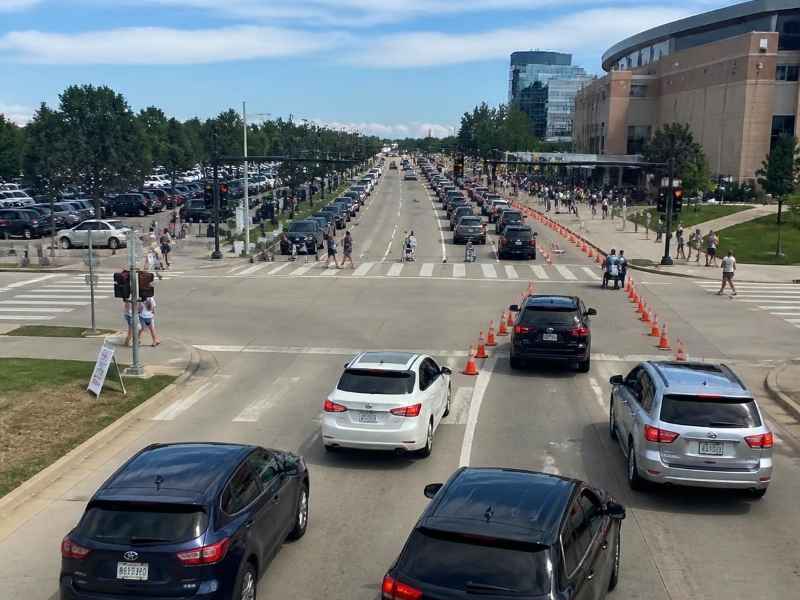
Once demand is clear, the engineer maps how vehicles will move through the site. This covers entry routes, parking lot entrances, and drop-off zones. The aim is to keep cars from crossing paths in ways that cause crashes or long backups.
Parking gets a close look because full lots create their own problems. Cars searching for open spaces slow everyone down and clog the entrances. The engineer plans how lots fill, where overflow parking goes, and how to guide drivers to open spaces without confusion.
People on foot need just as much attention. Crowds walking to and from parking areas can block cars and create risk at crossings. The plan sets safe crossing points and keeps walkers away from busy travel lanes wherever possible.
Rideshare pickups, buses, and emergency vehicles all need room too. A drop-off area in the wrong spot can jam an entire entrance. The engineer coordinates each of these needs so no single group blocks another, and so emergency crews can always get through.
Transportation Engineer Strategies for Temporary Traffic Control
Temporary traffic control keeps a plan working on the day of the event. The engineer may call for signs, cones, and clear lane assignments to guide drivers. These tools tell people where to go before they have a chance to guess wrong.
Trained traffic-control staff often help at the busiest points. They can wave cars through, hold pedestrian crossings, or open extra exit lanes during the departure rush. Their work fills gaps that signs alone cannot cover.
Signal timing and detours round out the plan. An engineer may suggest changes to nearby signal timing to move more cars during peak flow. Access restrictions and marked detours can steer traffic away from streets that would otherwise choke.
Clear communication ties it all together. Drivers do better when they know the plan before they arrive, so organizers may share routes and parking maps ahead of time. Every choice depends on the site, the crowd size, and local rules, so plans can vary from one event to the next.
Post-Event Evaluation and Future Traffic Planning
The review does not end when the event does. A transportation engineer watches how traffic actually behaved and records what worked. Queue lengths, congestion points, and safety concerns all go into that record.
This data shows where the plan held up and where it fell short. Maybe one exit backed up far longer than expected. Maybe a crossing needed more staff or a better location.
A written report often follows the event. It can be shared with organizers and local officials to support the next permit or planning request. Clear records make it easier to show that the site can handle traffic in a safe way.
Those lessons feed the next event. A repeat venue can refine its plan each time and cut delays year over year. Steady review turns a rough first event into a smooth routine for organizers, drivers, and nearby residents alike.
Frequently Asked Questions
What does a transportation engineer do for an event?
A transportation engineer plans how event traffic will move on and around your site. They review road capacity, set parking and drop-off routes, and design safe crossings for people on foot. They also plan temporary traffic control, such as signs, staff, and signal changes. The result is a clear plan that keeps traffic safe and moving.
When should I hire a transportation engineer for event traffic?
It’s best to bring in a transportation engineer early, well before the event date. Early review gives time to study road conditions, estimate demand, and get any needed approvals. Late planning often means rushed fixes and higher costs on the day of the event. Timing can vary by venue size and local rules, so confirm what your permit requires as soon as you can.
How does a traffic plan handle the rush after an event ends?
The rush after an event is usually the hardest part to manage. Most people leave within a short window, so exits and nearby roads fill up fast. A good plan opens extra exit lanes, adds staff at key points, and may adjust signal timing to clear cars faster. The engineer also reviews the departure afterward to make the next event smoother.
